
Containment that prevents cross-contamination
We isolate the work area with plastic sheeting and controlled airflow, so disturbed spores and dust do not spread to adjacent rooms, closets, or HVAC returns.
Serving Palm Springs, California & surrounding areas
24/7 Emergency Response
Mold remediation · Palm Springs
If you have a musty smell, visible growth, or recent water intrusion, we can inspect, contain, remove contaminated materials, and document the cleanup so you can move forward with confidence.
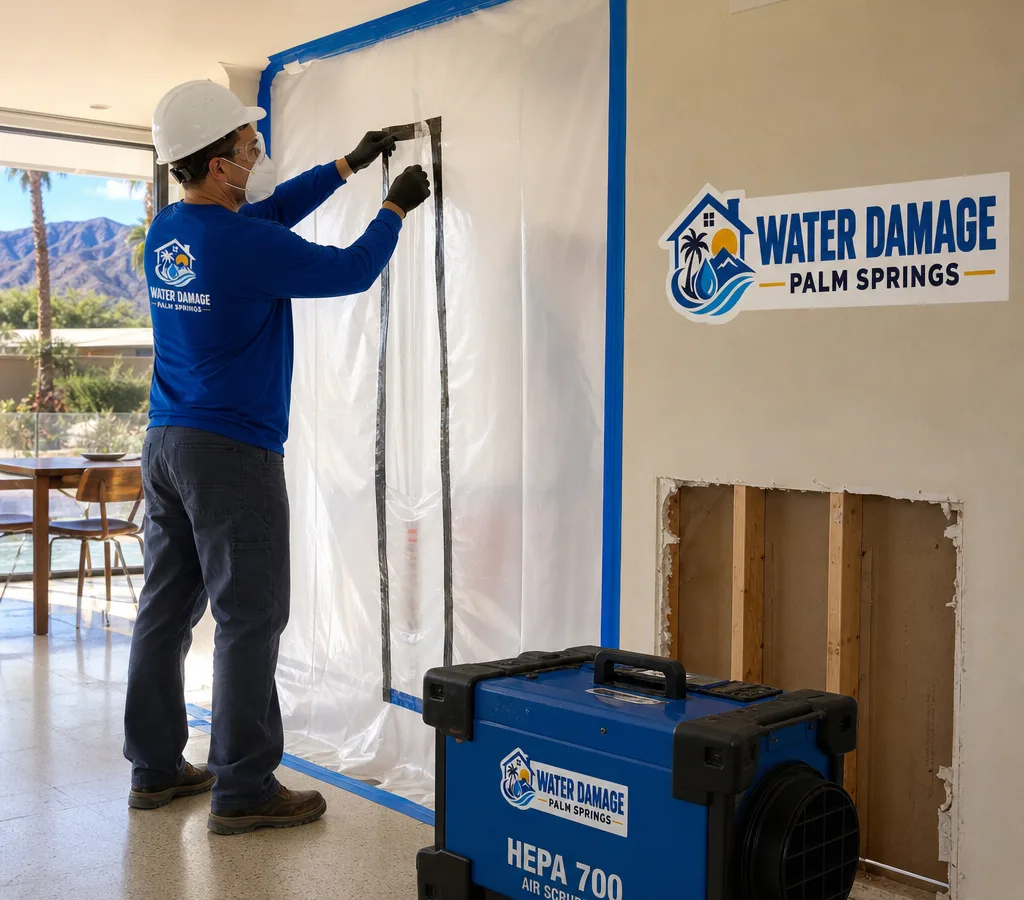
Contain the problem early
When you search for mold remediation Palm Springs, you are usually dealing with one of three situations: a leak you just found, a long-term moisture problem that finally showed up as staining or odor, or a real-estate or insurance requirement that needs professional documentation.
Water Damage Palm Springs focuses on practical, code-minded remediation: we locate and address the moisture conditions that allow mold to grow, set up containment to protect the rest of the property, remove unsalvageable materials, and clean remaining surfaces using HEPA filtration and appropriate antimicrobial products. The goal is simple: stop the spread, remove the contamination, and leave the area ready for the next phase of restoration.
Palm Springs homes often have conditions that make mold harder to spot early, like concealed plumbing in walls, HVAC condensate lines, and bathrooms that do not vent well during hot months. Condos and multi-unit buildings add another challenge: shared walls can let moisture migrate. If you are also dealing with wet building materials, start with water damage restoration first so drying and remediation are coordinated instead of working against each other.
Professional cleanup standards
We isolate the work area with plastic sheeting and controlled airflow, so disturbed spores and dust do not spread to adjacent rooms, closets, or HVAC returns.
True HEPA air scrubbers and HEPA vacuums capture fine particulate that standard shop vacs can blow back into the air.
Drywall, insulation, carpet pad, and swollen baseboards often cannot be fully cleaned. Safe remediation means removing what cannot be restored, not painting over it.
We clean framing and sheathing where it can be saved, with the right dwell time and agitation for the product being used, followed by controlled drying.
We can provide clear photos and a written scope of what was affected, what was removed, and what conditions need to stay corrected to help prevent recurrence.
Remediation is only part of the solution. We explain what the space will need next, such as drying verification, repairs, and humidity control, so you are not left guessing.
Hidden growth and moisture
Mold does not need much to take hold: a slow plumbing drip, a shower pan issue, or repeated condensation can keep materials damp long enough for growth. In Palm Springs, cooling systems run hard for long stretches, so we pay close attention to HVAC-related moisture and nearby building materials.
Common problem areas we remediate include:
Access matters. We open only what is necessary to reach contaminated materials, then keep the work zone under containment while we remove debris and clean the remaining structure. If the HVAC system is suspected to be distributing contamination, we will discuss temporary shutdown, return protection, and practical next steps.
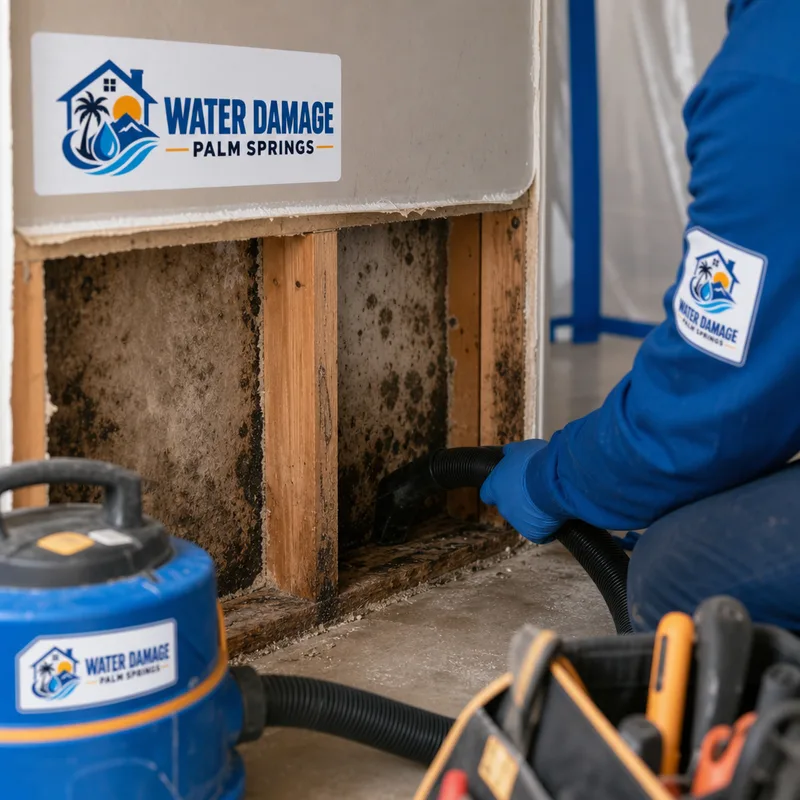
Assessment through documentation
We start by identifying where the moisture came from and what materials are affected. We look for visible growth, staining, odor pathways, and moisture patterns that suggest hidden damage.
Before demolition or cleaning, we define the work area and set containment with negative air as needed. We also plan debris routes to keep spores and dust from tracking through the home.
Porous materials that cannot be reliably cleaned are removed, bagged, and staged for disposal according to local requirements and building rules, especially in HOA properties.
We clean remaining structure and surfaces in the work area, using HEPA vacuums, wet wiping, and antimicrobial treatment where appropriate for the substrate and condition.
We confirm the area is dry enough to prevent regrowth, and we explain what conditions must stay corrected, including fixed leaks, controlled humidity, and improved ventilation.
You receive clear documentation of what was found and what was done, plus guidance on repairs and prevention so the space can be restored correctly.
Planning the scope
Most mold remediation projects in Palm Springs typically range from about $1,500 to $6,500, with small contained areas sometimes closer to $750 to $1,500 and larger, multi-room or hidden-growth jobs reaching $8,000+. The range depends on how much demolition is needed, not just the visible spot.
Pricing changes with the square footage of affected materials, where the mold is (attic, crawlspace, behind cabinets), how much containment is required, debris handling rules common in condos and HOAs, and whether drying equipment must run. The exact cost is confirmed after an on-site inspection and a written scope of work.
Containment, removal, and cleaning

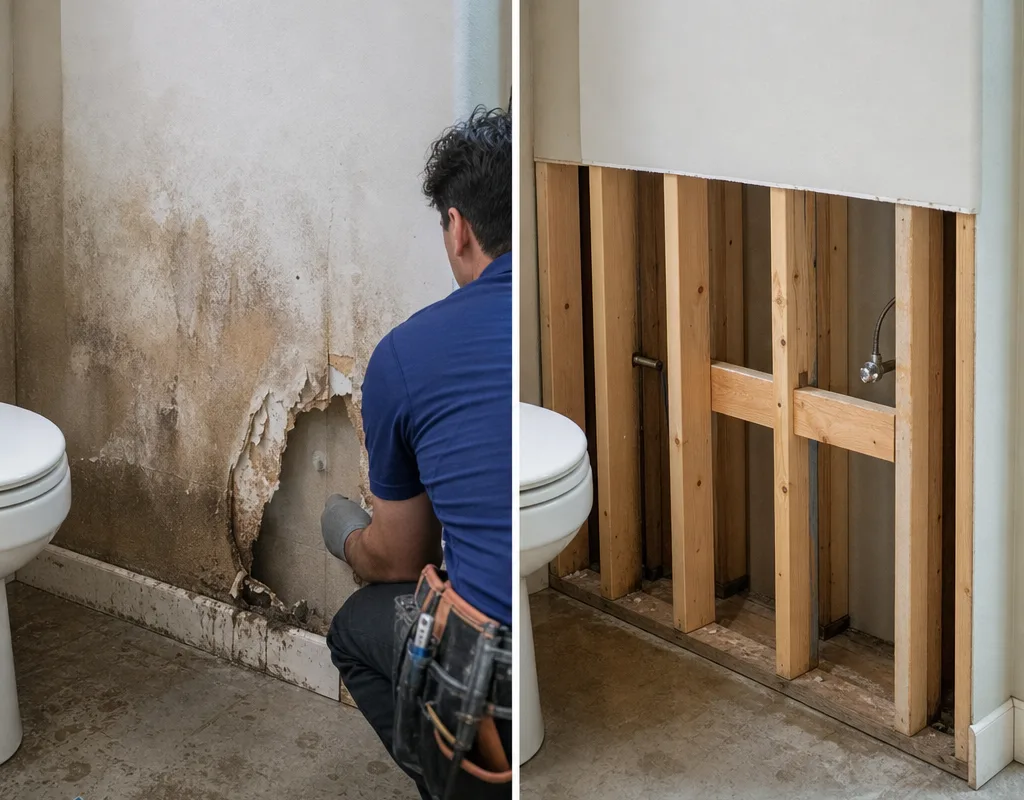
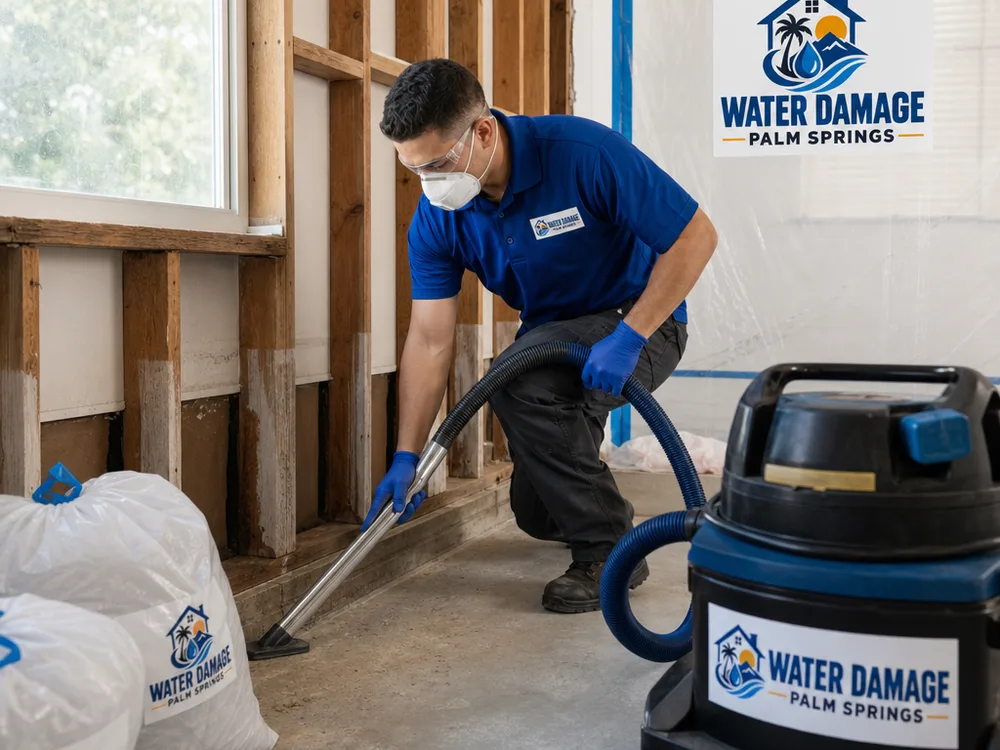
If you are seeing growth spread, smelling persistent mustiness, or worrying about a hidden leak, get an inspection and a written remediation plan before you start tearing into walls or running fans.
Call for Emergency HelpQuestions before calling
Most contained mold remediation jobs take 1 to 3 days, and larger projects can take a week or more when multiple areas are affected. The timeline depends on how much material has to be removed, whether drying is still needed, and how quickly the underlying moisture issue can be corrected.
It depends on where the affected area is and how the home is laid out, but many projects can be completed while occupants stay out of the contained work zone. If the contamination is near bedrooms, the HVAC system is impacted, or anyone in the home has respiratory sensitivity, we will recommend a safer occupancy plan for the duration.
Testing is not required for every job, but it can be useful when you need baseline information, clearance criteria, or real-estate documentation. If you want post-remediation clearance, we can coordinate the timing so sampling happens after cleanup and drying, and after containment is removed per the agreed protocol.
Yes, and the main difference is coordination. Many Palm Springs condo communities have rules for work hours, elevator and hallway protection, and where debris can be staged, so we plan containment, debris routes, and documentation accordingly.
Yes. Porous materials like drywall, insulation, and carpet pad usually cannot be reliably cleaned once contaminated, so professional remediation typically involves controlled removal and disposal, followed by cleaning of the remaining structure.
Mold returns when moisture is still present or when contaminated porous materials were not removed. Wiping visible growth or painting over stains does not fix the moisture source, and it does not address hidden contamination inside wall cavities, under flooring, or behind cabinets.
Start with a written plan
Tell us what you are seeing and where it is showing up. We will assess the affected area, explain the containment and removal plan, and provide documentation that supports the next steps for restoring your Palm Springs property.