
Lab-backed results you can use
Results are tied to sample locations and conditions on the day of testing, so the report supports real decisions instead of guesswork.
Serving Palm Springs, California & surrounding areas
24/7 Emergency Response
Mold testing · Palm Springs
Get clear, lab-backed answers about what's in your air and on your surfaces, plus a written plan for what to do next. Water Damage Palm Springs schedules inspections quickly and explains results in plain language.
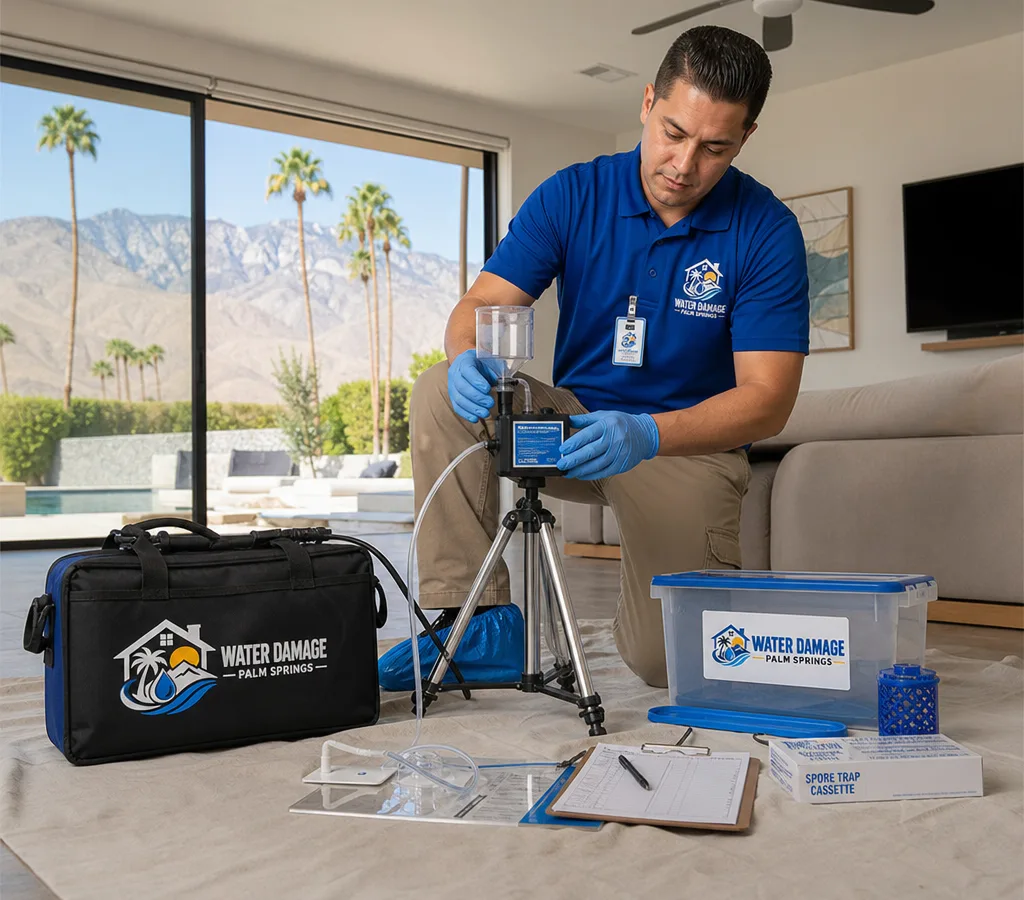
Know what you are dealing with
If you're searching for mold testing Palm Springs, you usually have a specific concern: a musty odor that won't go away, visible growth on drywall or vents, allergy-like symptoms that improve when you leave the house, or a recent leak that raises questions about hidden moisture.
Mold testing is most useful when it answers a decision you have to make. That may mean confirming whether discoloration is mold, checking whether remediation removed the problem, documenting conditions for a property file, or comparing an affected area with an outdoor control.
Palm Springs homes often run HVAC for long stretches of the year, allowing airborne particles to move through returns and ductwork. Sampling and interpretation should therefore account for airflow, filter condition, and whether doors and windows have been open.
Our goal is to provide results you can act on, not just a lab report. If the concern followed a leak or wet building materials, we also consider the broader condition of the property when deciding what should be tested first.
Inspection and sampling
A proper mold testing appointment starts with an on-site inspection. We look for moisture sources and likely growth locations before samples are taken, because sampling without context can miss the real issue.
Typical inspection and testing steps include:
We keep the focus on the question you need answered: Is there a mold problem, where is it likely coming from, and what is the safest next step?
Actionable reporting
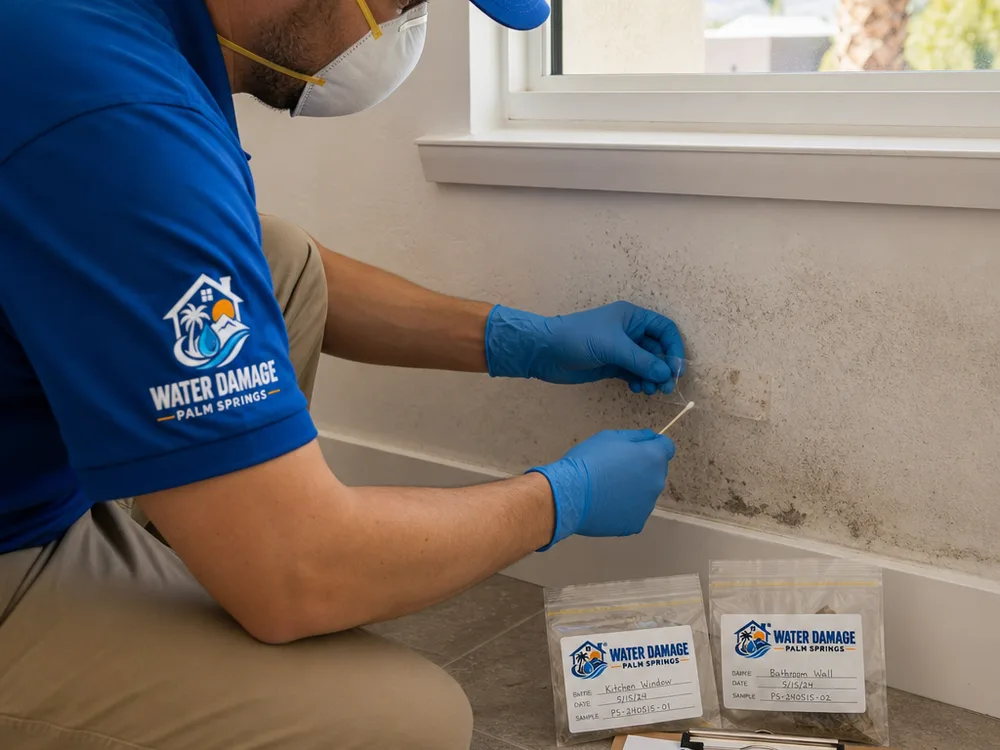
Results are tied to sample locations and conditions on the day of testing, so the report supports real decisions instead of guesswork.
We explain what the findings mean, including how indoor results compare with the outdoor control when air sampling is performed.
If cleanup is needed, we outline what to address first, what to contain, and when post-remediation verification makes sense.
Not every situation needs every sample type. Air, surface, and targeted locations are selected using symptoms, visual clues, and moisture evidence.
Testing and documentation can support communication between tenants, landlords, and property managers when an objective third-party assessment is needed.
Desert property context
Mold problems are usually moisture problems first. In Palm Springs, the source is often not dramatic flooding but a smaller persistent issue: a slow plumbing leak, bathroom condensation, or moisture trapped behind baseboards after a minor overflow.
Seasonal occupancy and long periods with a property closed can change ventilation patterns. If HVAC settings, filters, or returns pull from a damp area, spores and odors can spread beyond the original spot.
Different property types raise different testing questions:
We work throughout Palm Springs, including Downtown and the Movie Colony, where older construction and remodel layers can conceal past moisture damage, and South Palm Springs, where strong sun exposure and extended AC use can contribute to condensation at registers and cool surfaces when indoor humidity is high.
Inspection through reporting
We'll ask where you're noticing odors or symptoms, whether there was a leak or overflow, and which rooms feel most affected so the inspection is targeted.
We inspect first, then confirm which sample types and locations will answer your question. We also discuss access needs such as attic hatches or HVAC closets.
Samples are labeled by location and handled with documentation so the lab results match the exact areas tested.
You receive a report connecting results with inspection findings, explaining what they mean, and flagging likely moisture drivers to address.
If remediation is needed, we outline a practical scope and can schedule post-remediation verification testing to confirm conditions after the work is complete.
Planning the sampling scope
Mold testing in Palm Springs typically ranges from about $300 to $900+, depending on how many areas are sampled and whether you need air samples, surface samples, or both. A basic visit with a limited number of samples is usually at the lower end, while larger homes, multi-unit concerns, or detailed documentation increase the total.
Pricing is driven most by the number of samples, access to suspected areas such as attics or HVAC closets, and whether you're confirming a suspected problem or verifying post-remediation conditions. Your exact cost is confirmed after the on-site inspection and an agreed sampling plan.
“We had a musty smell coming from one bedroom and couldn't figure out if it was the carpet, the AC, or something in the wall. The inspector explained where to sample and why, and the report made it clear what needed to be fixed first.
“After cleanup, we wanted proof it was actually resolved before we moved back into the space. The clearance testing and the written results gave us peace of mind and something we could keep in our records.”
Questions before calling
Scheduling depends on current demand, but we prioritize time-sensitive situations like recent leaks, active odors, or tenants reporting health symptoms. Sharing the address, rooms involved, and recent water events helps us plan the right sampling approach.
You need the sample type that answers your specific question: surface sampling identifies what's on a visible spot, while air sampling helps evaluate what may be circulating compared with an outdoor control. We confirm the plan after seeing conditions on-site.
Leave conditions as normal as possible for the prior day. Run the HVAC as usual and avoid heavy cleaning, air purifiers, or ozone devices immediately before testing. Do not seal or paint over suspect materials after a recent leak.
Testing can strongly suggest hidden growth, but it cannot guarantee what's inside a closed cavity without verification. We look for moisture patterns and take samples that help infer whether a concealed source is likely, then recommend the least invasive next step.
Yes. Third-party testing can document conditions and establish a baseline when there is disagreement about odors, visible spotting, or whether cleanup was completed properly. Inspection notes and sample locations are especially important in multi-unit properties.
Yes, we can perform post-remediation verification to check that affected areas were cleaned appropriately and that the space is ready to re-occupy. Clearance testing is particularly useful when containment was used or porous materials were removed.
Plan the right next step
Tell us what you're seeing, smelling, or dealing with after a leak, and we'll schedule a mold inspection with the right sampling plan for your Palm Springs property and a report that lays out the next steps.