
Water-damage related cleanup
Cleaning and sanitizing after leaks, supply-line breaks, toilet overflows, appliance failures, or rain intrusion, with attention to what can and cannot be safely cleaned.
Serving Palm Springs, California & surrounding areas
24/7 Emergency Response
Cleaning service · Palm Springs
Get a clear plan, careful work, and a cleaner, safer space. We handle residential and commercial cleaning in Palm Springs with an emphasis on urgent, high-stakes cleanups when your property cannot wait.
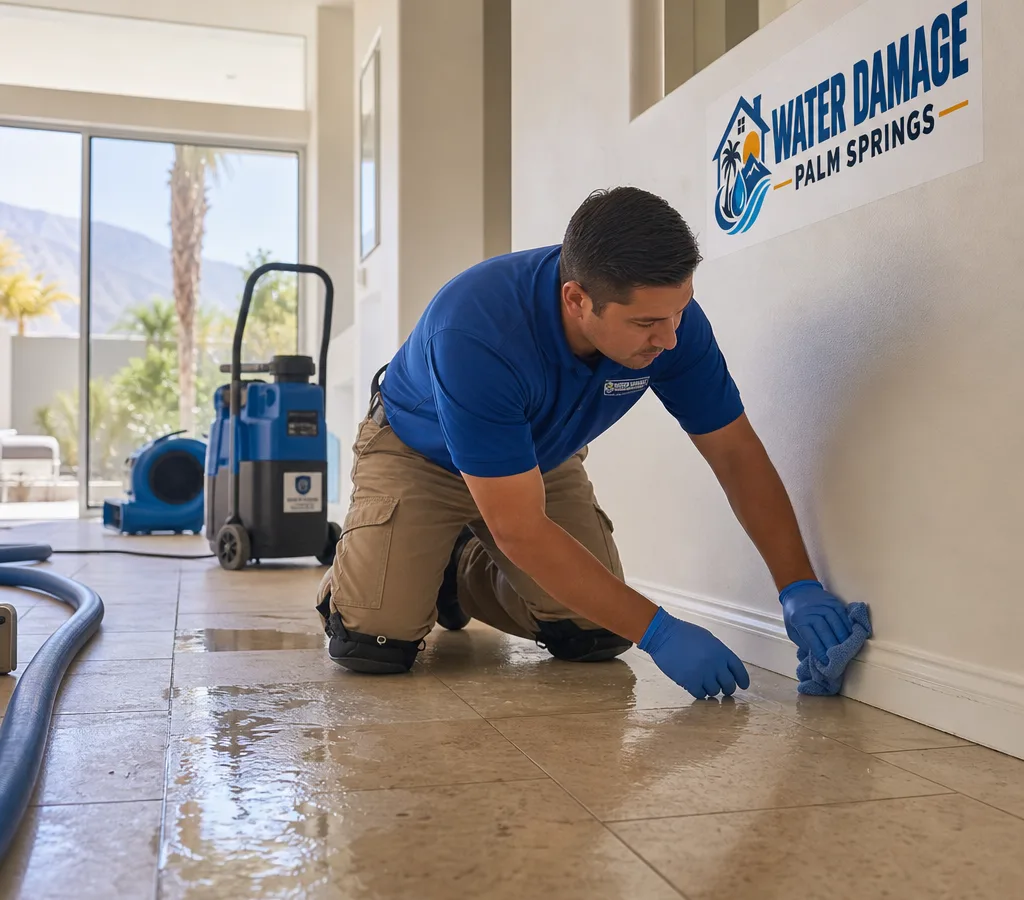
Urgent cleanup support
If you searched for a Palm Springs cleaning service, you are probably trying to solve a real problem fast: a space that is uncomfortable to live or work in, a mess that keeps spreading, or cleanup you do not want to guess your way through.
Water Damage Palm Springs provides Palm Springs cleaning services for homes, condos, short-term rentals, and local businesses. We focus on practical outcomes: remove the grime and residue, control moisture and odors, and leave the area safe to re-occupy.
Palm Springs has a mix of single-family homes, condos, and older properties where building materials can react differently after a leak or overflow. Drywall, baseboards, cabinetry, and flooring all need the right approach. A quick wipe-down may make things look better while leaving moisture and contamination behind. We take the extra steps that matter for a durable result.
If you want to get a sense of who you are hiring first, Water Damage Palm Springs is the local team behind this service.
Cleanup scope
Cleaning and sanitizing after leaks, supply-line breaks, toilet overflows, appliance failures, or rain intrusion, with attention to what can and cannot be safely cleaned.
We clean with the drying plan in mind so materials are not trapped wet. This matters for carpet, pad, baseboards, drywall, and cabinet toe-kicks.
Deodorizing and residue cleanup after water events, including musty smells that can linger if surfaces and porous materials are not addressed correctly.
Houses, condos, offices, retail spaces, and back-of-house areas, with work practices that respect occupied properties and busy schedules.
Edges, corners, behind appliances, and under sinks. These are common sources of ongoing odor and staining when cleanup is rushed.
You get a written explanation of what we are cleaning, why it matters, and what the next steps are if drying or material removal is needed.
Post-incident cleaning
A routine cleaning aims to improve appearance. Post-incident cleaning aims to protect the building and the people inside it.
When water gets into materials, the priority is to stop ongoing damage and reduce the risk of microbial growth. That means identifying where water traveled, what materials were affected, and what can be cleaned versus removed. For example:
In Palm Springs, hot weather can speed evaporation on the surface while moisture remains deeper in porous materials. That can make things feel dry before they truly are. Our cleaning approach pairs with drying and verification so you are not left with lingering odor or hidden moisture problems.
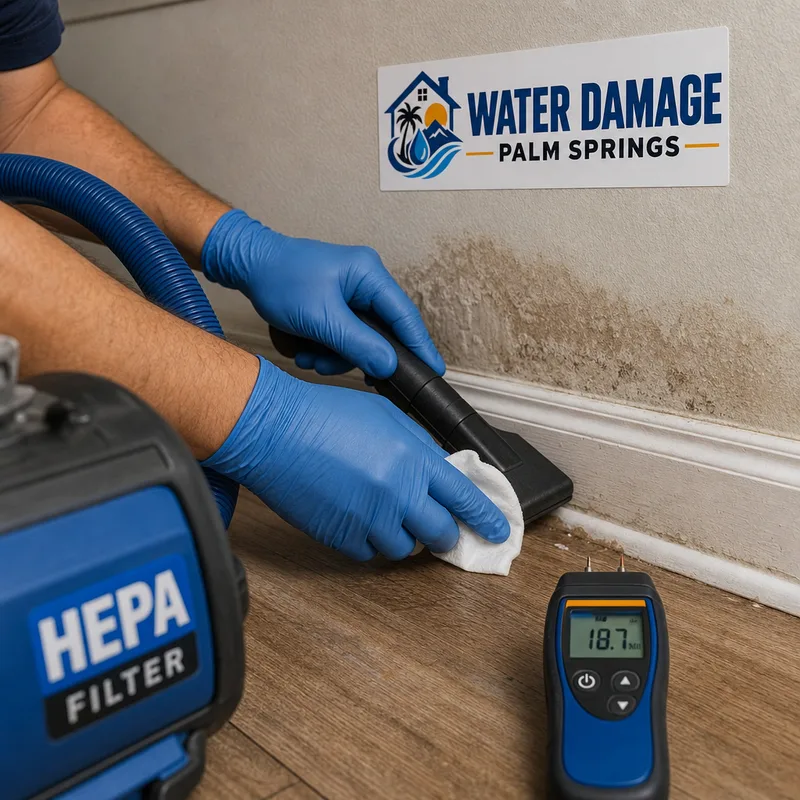
Assessment through final detail
We look for the source and the path of water or residue, then set practical boundaries so you know what areas are affected. If containment is needed to keep dust or odors from spreading, we plan that first.
If there is standing water or heavy debris, we remove it so cleaning and drying can actually work. This step also reduces slip hazards and protects floors and furnishings.
We clean floors, baseboards, walls, cabinetry exteriors, and other impacted surfaces using methods suited to the material type and the kind of water involved. The goal is a visibly clean result plus a safer surface.
When drying is part of the scope, we position equipment to move air and reduce moisture in materials. We use moisture readings to guide decisions rather than guessing based on how it feels.
We finish with detail work where residue tends to remain, then explain what to watch for over the next few days. If any materials cannot be saved, you will understand why and what options you have.
Planning the scope
Most Palm Springs cleaning services tied to water-related cleanup typically range from about $300 to $1,500+, depending on how many rooms are affected and how much drying and sanitizing is required. A small, contained cleanup—for example, a single bathroom or laundry area—often falls on the lower end, while multi-room incidents, carpet and pad work, and cabinet or wall cleaning push costs higher.
Price depends on the category of water, how far moisture traveled, how much material is porous, access, and whether contents need careful handling. Exact cost is confirmed after an on-site inspection and a written scope.
“We had a leak under the kitchen sink that soaked the cabinet base and the floor. They explained what could be cleaned, what had to dry, and what needed to come out. The smell was gone and the area felt normal again.
“Our condo had an upstairs overflow and water got into the hallway carpet. The team was on time, kept the work area controlled, and the cleanup was much more thorough than a basic cleaning crew.”
“They gave a clear scope before starting and stuck to it. The drying plan made sense, and the final cleaning included the details we would have missed.”
If the situation is time-sensitive, start with a quick assessment and a written plan. The sooner moisture and residue are handled correctly, the easier it is to protect finishes and prevent lingering odors.
Call for Emergency HelpQuestions before calling
Same-day availability is sometimes possible, and it depends on the time you reach out and the scope of the cleanup. If you are dealing with standing water, wet carpet, or a musty odor that is getting stronger, getting an assessment quickly helps determine whether simple cleaning is enough or if active drying is needed.
Clean water, like a supply-line leak, usually needs thorough cleaning and drying, while contaminated water, like sewage or some overflows, requires stricter handling, more intensive sanitizing, and sometimes removal of porous materials. That difference affects both the cleaning method and the overall cost because the safety requirements and labor are higher with contamination.
Carpet can sometimes be saved if the water source is clean and the response is fast, but the pad beneath often holds moisture and may need replacement. The decision comes down to the water category, how long it sat, and moisture readings in the carpet, pad, and subfloor.
Cleaning helps, but musty odor usually means moisture remains in porous materials, so drying is often required for the smell to stay gone. If the surfaces look clean but the odor returns when the space warms up, that is a common sign that moisture is still present behind baseboards, under flooring, or inside cabinetry.
We limit spread by defining the work area first and using practical controls like removing affected debris carefully, using HEPA filtration when appropriate, and keeping airflow directed for drying instead of blowing debris through the home. The right setup depends on whether you have drywall work, wet flooring, or contamination concerns.
If it is safe, stop the water source and avoid running fans that blow air across contaminated areas. Move small personal items away from the wet zone and take quick photos for your records. In Palm Springs, warm temperatures can make odors intensify quickly, so keeping the area accessible for assessment helps speed up the right next step.
Start with a clear scope
Tell us what happened and what areas were affected. We will confirm the scope on-site, explain what can be cleaned versus replaced, and lay out the next steps to get your property back to normal.